Governed domain
Keeps requirements, controls, assets, risks, people and evidence as traceable, versioned records.
Operational GRC, under active development
vFrameworks is building a deterministic governance and compliance engine for organisations that need requirements, risk, controls, evidence and approvals to remain connected as work moves from assessment into operation.
Defined needs and obligations
Structured activities and workflows
Identify, assess, and prioritise risk
Design and implement safeguards
Perform and monitor
Generate and capture proof
Independently validate
The vFrameworks engine
Keeps requirements, controls, assets, risks, people and evidence as traceable, versioned records.
Connects assessments to the evidence, source versions and review context used to support them.
Applies deterministic risk and treatment mechanics while keeping proposals subject to governance review.
Relates business processes, assets, controls and requirements without creating duplicate authority.
Runs evidence-aware workflow stages with provenance, traceability and defined human approval points.
Mimir: the working interface
Mimir is the user-facing workspace and operational interface layer for vFrameworks and RT-GRC capabilities. It helps people investigate material, create structured next steps and retain the trace behind the work.
01
Evaluate supplied policy or document content against applicable requirements and identify weaknesses, missing safeguards and priorities.
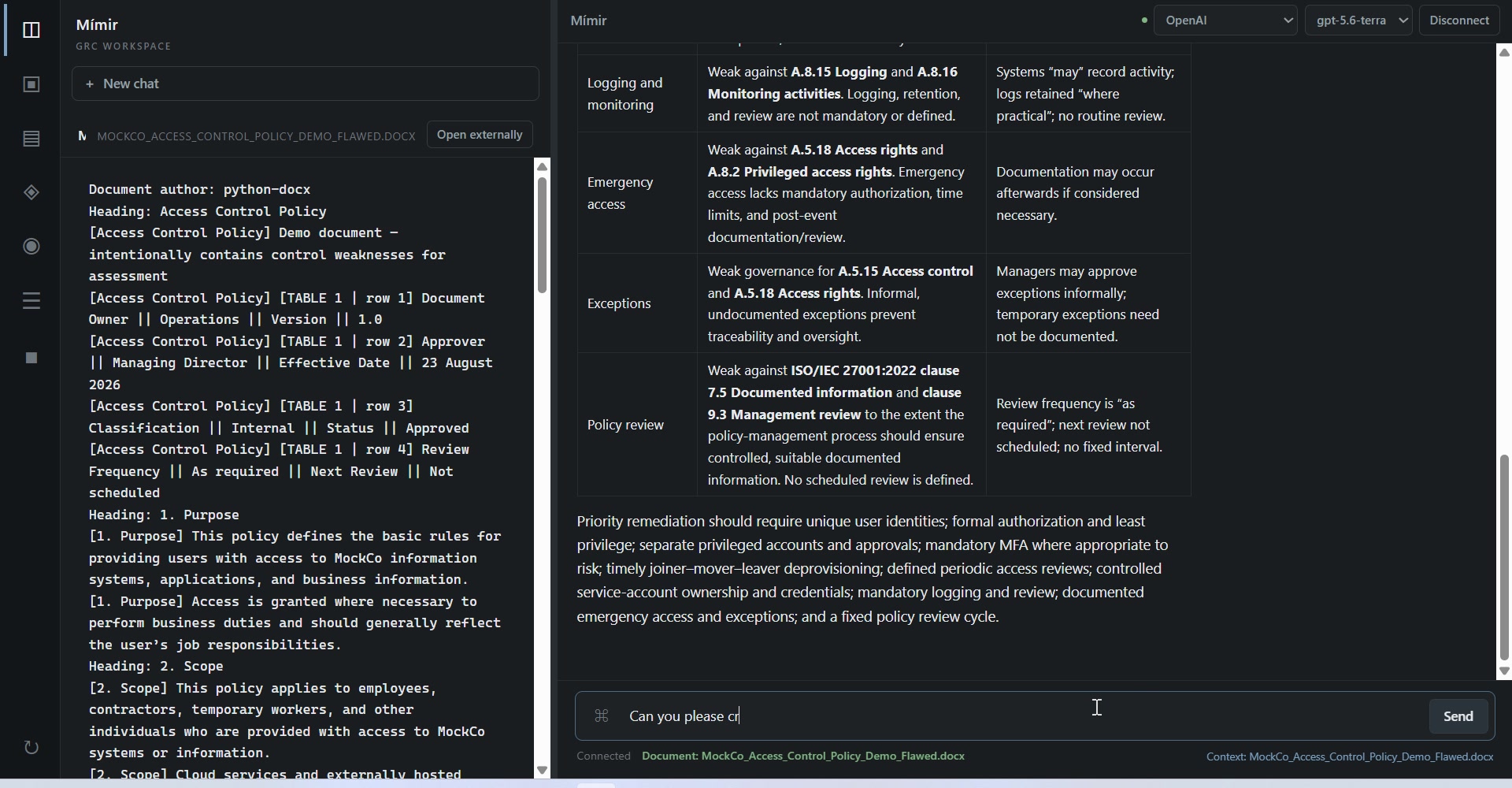
02
Translate findings into a structured action checklist, including evidence and verification expectations where they are visible.
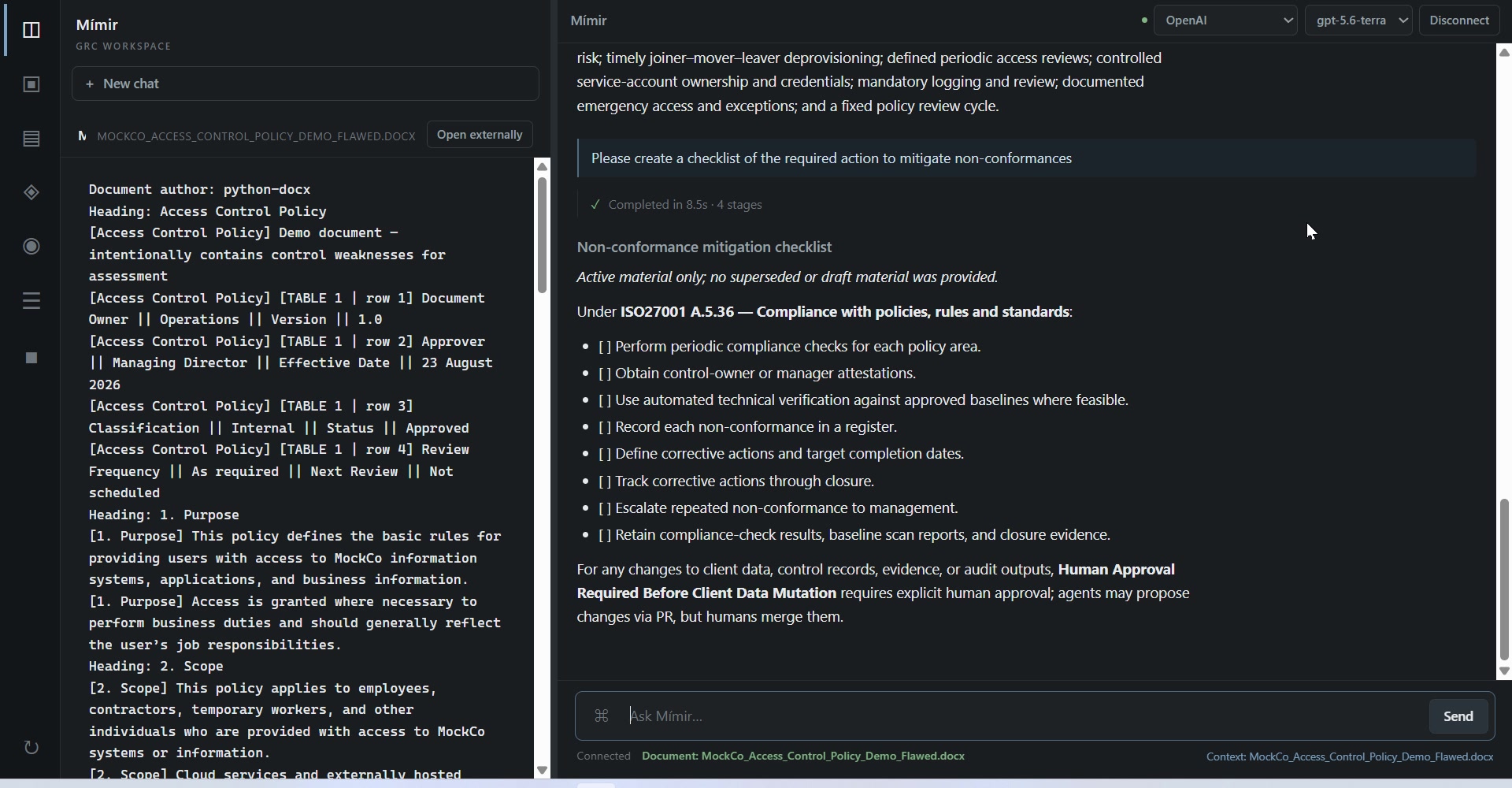
03
Expose the routed stages and verified activity behind an answer so the result is not an opaque AI response.
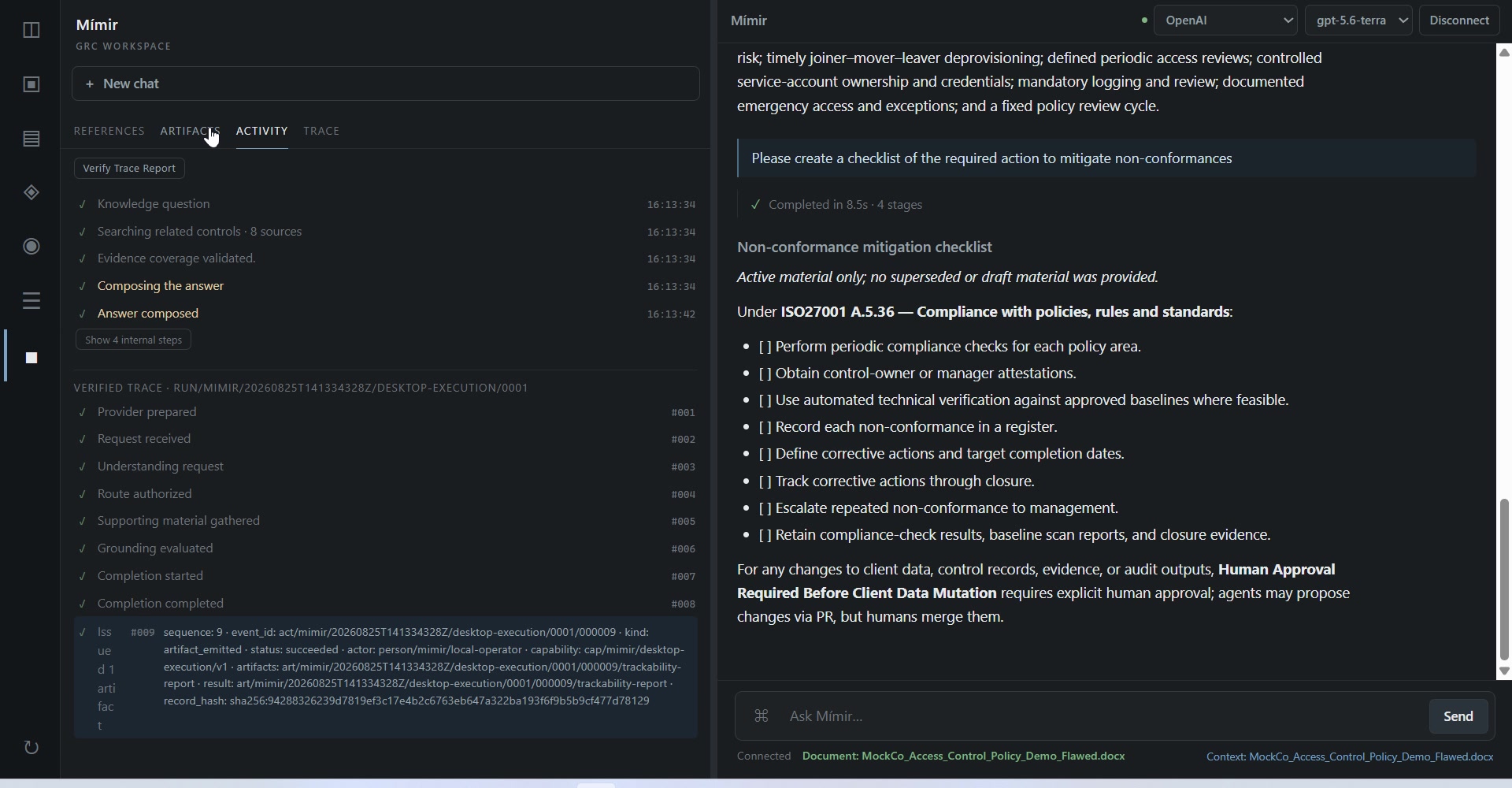
04
Keep analysis, generated artifacts and execution activity connected to the working context for later review.
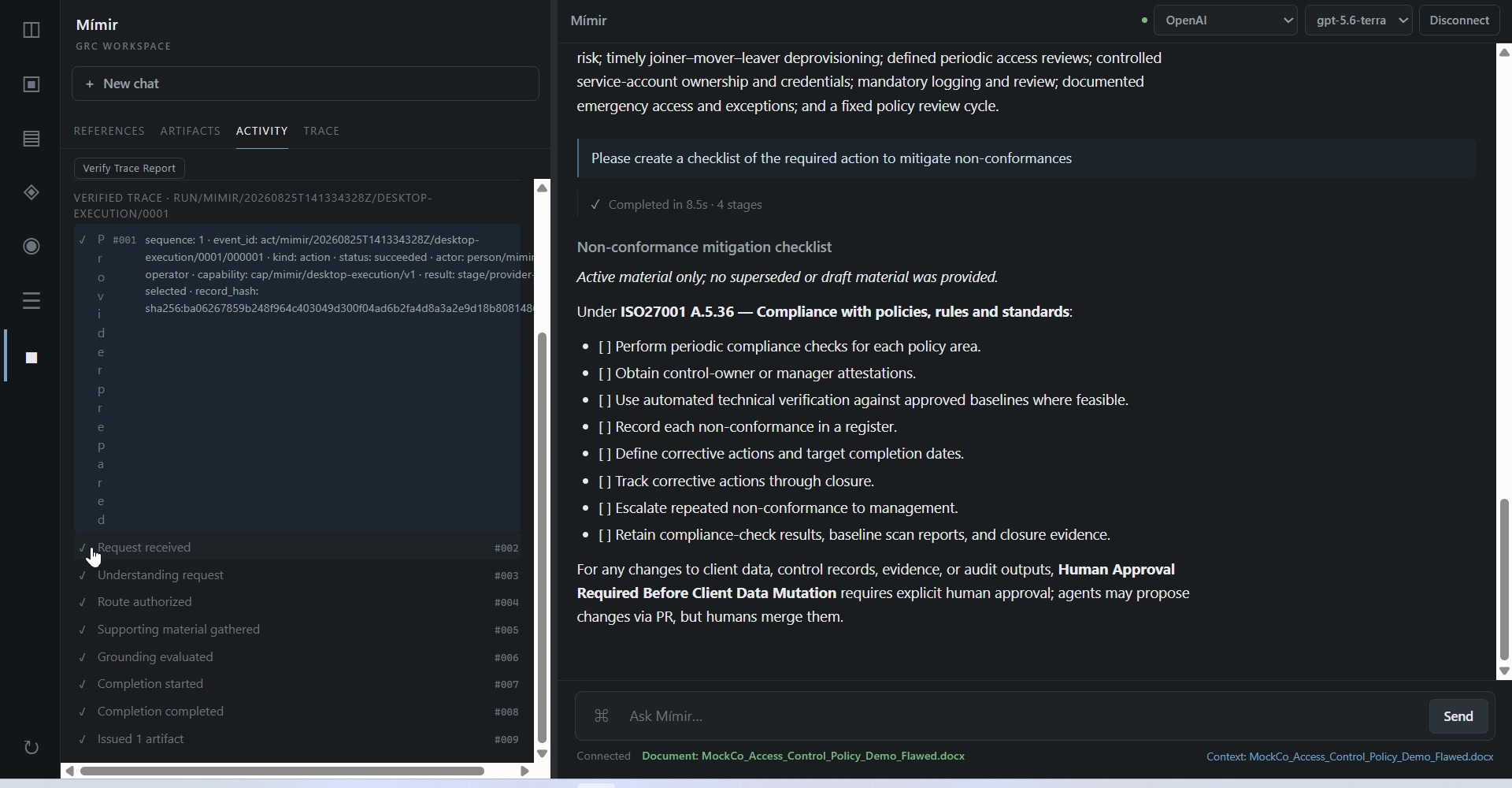
Platform-led. Evidence-aware. Human accountable.